
LKC Technologies
English
English Español Português 日本
  • Products
    • For Humans
      • RETeval
      • UTAS mf/PERG
      • Sensor Strips
    • For Animals
      • RETevet
      • Request Demo
      • Order Supplies
  • Applications
    • Visual Electrophysiology
      • Electroretinography (ERG)
      • Visual Evoked Potential (VEP)
    • Clinical Conditions
      • Diabetic Retinopathy
      • Glaucoma
      • Retinal Ischemic Diseases
      • Inherited Retinal Disorders
      • Miscellaneous
    • Animal Applications
  • Resources
    • Case Studies
    • eBooks & Reports
    • Webinars
    • Articles
    • Research
    • Podcasts
    • Blog
    • Videos
    • Software
  • About LKC
    • Vision & Mission
    • Team
    • Clinical Advisors
    • Testimonials
    • History
  • Contact
  • Academy
  • Buy Sensor Strips
  • Schedule a Demo

Research Category: Pediatric

Role of additional topotecan injections (plus two) in reducing recurrence rate in retinoblastoma of group D and group E patients: a retrospective study
CERKL related autosomal recessive retinitis pigmentosa – A report on four affected members from a single family
Infrared Photography: A Novel Diagnostic Approach for Ocular Surface Abnormalities Due to Vitamin A Deficiency

High-dose intravitreal topotecan (100 mcg/0.1cc) as monotherapy for recurrent/refractory intraocular retinoblastoma in seven eyes
Early-Onset Retinal Dysfunction Associated with Novel WDR19 Variants in Sensenbrenner Syndrome
Vitamin A deficiency presenting with ptosis and optic neuropathy in child with autism spectrum disorder
Can a Portable Flash Visual Evoked Potential (VEP) Device Identify Chiasmal Decussation Anomalies in Albinism?
Can a Portable Flash Visual Evoked Potential (VEP) Device Identify Chiasmal Decussation Anomalies in Albinism?
Could a hand-held, visual electrophysiology device theoretically reduce diagnostic waiting times for complex eye conditions in the NHS?
Reference ranges of light-adapted full-field electroretinogram and associated factors in a large cohort of healthy school-aged children and adolescents

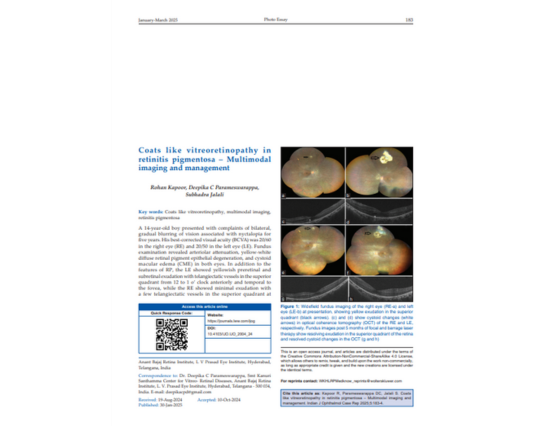
Coats like vitreoretinopathy in retinitis pigmentosa – Multimodal imaging and management
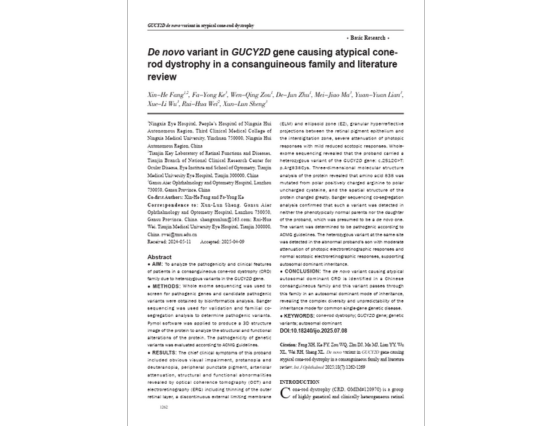
De novo variant in GUCY2D gene causing atypical cone-rod dystrophy in a consanguineous family and literature review

← older
  • Products
    • RETeval
    • UTAS mf/PERG
    • Sensor Strips
    • RETevet
  • Electrophysiology Tests
    • Electroretinography (ERG)
    • Full-Field ERG (ffERG)
    • Pattern ERG (PERG)
    • Multifocal ERG (mfERG)
    • Visual Evoked Potential (VEP)
    • Address20501 Seneca Meadows Parkway, Suite 305
      Germantown, MD 20876 USA
    • Phone+1 301 840 1992 (US & Canada)
      +358 40 8486625 (International)
    • International Distributors
      • Medical Device Distributors
      • Veterinary Device Distributors
  • Follow LKC Technologies on LinkedIn
  • Follow LKC Technologies on Facebook
  • Subscribe to LKC Technologies on YouTube
  • Follow LKC Technologies on Instagram
LKC_AMETEK_website_logo_RGB_color
© 2026 LKC Technologies, Inc.
  • Accessibility Statement
  • Terms & Conditions
  • Certifications
  • Privacy Policy
  • Careers

California Proposition 65 information

Prop-65Warning: This product can expose you to chemicals including lead, which is known to the State of California to cause cancer and birth defects or other reproductive harm. For more information go to www.P65Warnings.ca.gov.

Substance Tables:

The table below lists substances which may be contained within LKC’s RETeval and RETevet products. Substances listed as Type 1 are within permissible levels in one or more of LKC’s products. Substances listed as Type 2 are used in the production of some components used in LKC products and may be present at trace levels, but are typically destroyed during processing. 

RETeval and RETevet Devices

Substance CAS # Type Listed as causing:
Nickel 7440-02-0 1 Cancer
Acrylonitrile 107-13-1 2
Ethylbenzine 100-41-4 2
Crystaline Silica 14808-60-7 1
Lead 7439-92-1 1 Cancer Developmental Toxicity Male Reproductive Toxicity Female Reproductive Toxicity
Methylene Chloride 75-09-2 2 Cancer Female Reproductive Toxicity
Bisphenol A 80-05-7 2
N-Hexane  110-54-3 2 Male Reproductive Toxicity